See Exactly Where Her Mental Game Breaks Under Pressure
Watch the video, then book her Competitive Edge Strategy Session. I assess her across the nine areas that decide how she competes, score where she actually stands in each one, and you leave with her written plan.
Three reasons her games don't match her practices
Challenge 1 · The guessing game
She's loose and great in practice, then she freezes when it counts, and when you ask what happened she just says "I don't know." So everyone guesses, and worse, she starts believing something is just wrong with her.
Nobody has actually measured what's happening in her head under pressure, so every "fix" is a shot in the dark aimed at the wrong target.
Challenge 2 · Confidence with nothing to do
You tell her to be confident. But in the moment, right after a mistake, she has nothing to actually do. So one error snowballs into three, because she has no way to stop the slide while it's happening.
"Be confident" and "shake it off" are instructions with no method underneath them. You can't execute a feeling.
Challenge 3 · It stays in practice
Even when she's calm and sharp in practice, game day is a different animal. The crowd, the scoreboard, the pressure, and the version of her you know vanishes.
Mental skills taught in a calm setting don't automatically survive chaos. If she never practices using them under real pressure, they collapse the second the whistle blows.
2x NCAA Champion at Stanford · 2x All-American · 2x Pac-10 Player of the Year · ABL All-Star · WNBA player · M.A. in Sport and Performance Psychology · Certified Mental Performance Consultant®
I've been the athlete on the court, the coach on the sideline, and the parent in the stands. But I didn't build this because of the wins. Underneath the titles was relentless pressure, self-doubt, and eventually a depression that forced me to walk away from my professional career. Coaching female athletes since, I've watched the same thing on repeat: talented girls dominating in practice and disappearing in games. This session is where we figure out exactly what that looks like for her.
"She no longer beats herself up over minor mistakes. She ended the season with multiple offers and is now committed to play D1."Parent of a high school basketball player
"She gained confidence, had fewer errors, and played with the 'next ball' mindset."Club volleyball mom
"I learned to let go of mistakes, use reset words, and stay mentally sharp. I stopped worrying about what I couldn't control."College basketball player
These athletes showed up, did the work, and followed the system. Results depend on the effort and consistency each athlete puts in. Individual experiences vary.
Three things, in 45 minutes, together
She's on this call with you. This isn't a briefing about her, it's a working session with her in the room.
-
1
I assess her across nine areas I take her through the nine areas that decide how she competes and ask her what's actually happening in each one. She answers in her own words, so nothing is a guess from the sideline.
-
2
We score her mental game, together Every area gets a real score. That becomes her baseline, in writing, probably for the first time in her career.
-
3
You leave with her plan Not everything needs fixing. I show you the two or three gaps actually costing her games, why they're happening, and exactly what she works on first, with specific homework she can start this week.
Nine steps. Three stages. Nothing left to guess.
- 1. The Mental Game Audit
- 2. Know Your Brain
- 3. Rewire Limiting Beliefs
- 4. Own the Next Play
- 5. Practice With Purpose
- 6. Stack the Evidence
- 7. Activate Her GameFace
- 8. Lock In
- 9. Reflect + Rise
These are the nine areas I score her on.
This is for:
- A talented athlete who's serious about her sport, ready to show up and talk through what's actually happening in her games
- A family willing to treat the mental game as a real skill to train, not a one-time pep talk
- An athlete who's coachable, open to feedback, and willing to practice the tools between sessions
- A parent ready to invest in her now, knowing these skills carry into school, life, and the highest levels of her sport
Is this just more motivational talk?
Fair question, you've probably sat through exactly that before. The difference: I'm not a hype person with a podcast. I'm a two-time NCAA Champion, a former WNBA player, and a Certified Mental Performance Consultant® with a Master's in the field. On the call you won't get a pep talk. You'll get a straight read on what's holding her back and a specific plan to fix it, and you keep that plan whether we work together or not.
She's already in lessons, club, and training. Can we add anything else?
I hear this from almost every family, and it's the best argument for this, not against it. She's already putting in the physical hours. The reason they aren't showing up in games isn't more reps, it's the mental piece nothing else is training. And this session isn't homework added to her week, she's on the call with us doing the work in real time.
Her season is almost over. Why now?
The weeks between seasons are the best time to build this. Mental skills need reps under low pressure before they hold up under high pressure, so the off-season is when they stick. And if she's mid-season and falling apart, that's not a reason to wait, it's exactly what this session is built to address fast.
If it's free, what's the catch?
I charged $299 for this session until recently, so let me be straight with you about why it's free now. I only work with a small number of athletes privately, and I can't tell from a form whether I'm the right person for your daughter. So we talk first. You leave with her scores, her priorities, and her first homework whether we work together after or not. At the end, if I think I can help her and you want that help, I'll explain how I work.
What's the actual risk here?
Forty-five minutes. That's it. Worst case, you and your daughter spend that time getting a clear read on where her mental game stands, you leave with her plan and her first homework, and you decide the rest isn't for you. You keep the plan either way.
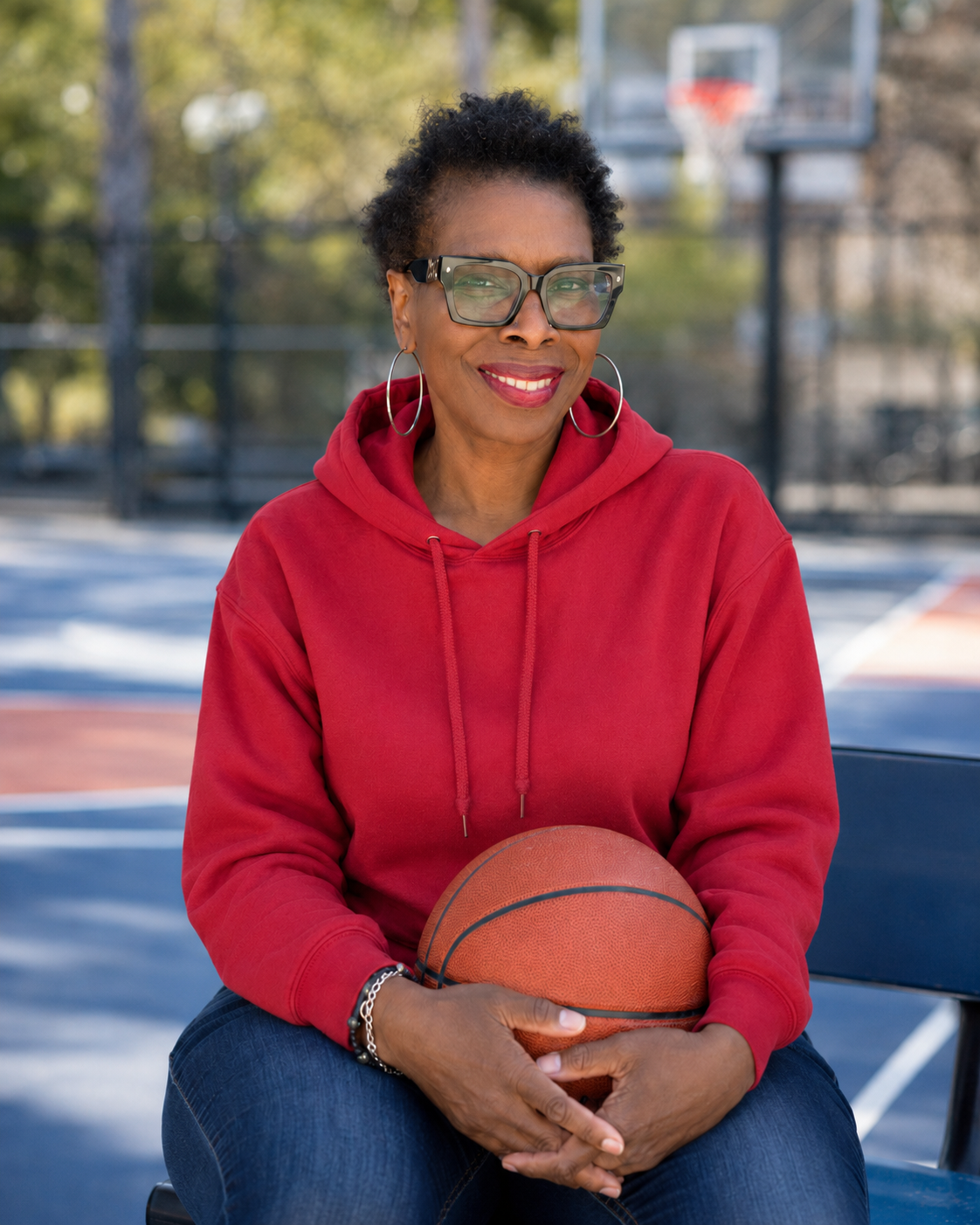
Coach Val Whiting
2x NCAA Champion at Stanford, WNBA player, M.A. in Sport and Performance Psychology, Certified Mental Performance Consultant®. I've lived this from every seat: the court, the sideline, and the stands.